Transformation Of US Dairy Industry Over 250 Years

How US Dairy Achieved Global Nutrient Leadership
In the 250 years since the founding of the United States, no agricultural sector has undergone a more profound structural transformation than dairy processing and production. From 1776 homesteads to 2026 data hubs, 250 years of innovation transformed US dairy into a global leader in nutrient density.

The dairy industry has undergone a significant transformation over the past 250 years, evolving from small family farms to large-scale, high-tech operations. Modern mega-dairies are now equipped with advanced technologies, enhancing efficiency and sustainability.

The US dairy industry has experienced a profound transformation since the country’s founding in 1776. Initially, dairy production was a local, survival-driven necessity, with families keeping cows to provide essential nutrition. Over the next two and a half centuries, the industry evolved into a sophisticated network of high-tech, corporate mega-dairies.

By 2026, the traditional homestead model had been replaced by advanced commercial operations, with facilities milking over 1,000 cows. These modern production sites are equipped with real-time sensor platforms that allow herd managers to monitor animal health and nutrition with precision, a significant leap from the manual labor of the past.

Technological advancements have led to the development of crossbred animals designed to meet specific cheese production needs in international markets. The integration of large-scale anaerobic methane digesters and nutrient-recovery systems has transformed dairy operations into potential net-positive energy producers for local communities.

Despite these changes, the industry’s core remains tied to multi-generational family farming legacies. Daily routines on farms continue to reflect the silent, practiced choreography of livestock management that has defined the sector for generations.

By the turn of the 21st century, the industry had hit a staggering milestone of efficiency. As Dennis Rodenbaugh, chair of the Innovation Center for U.S. Dairy, recently noted, the modern U.S. dairy cow is a biological marvel. Compared to her midcentury predecessors, she produces five times more nutrition while using 65% less water and requiring 90% less land. We have spent 250 years perfecting the “how” of production. Now, we are entering the “why” of the digital era.

The industry’s progress is marked by the construction of modern manufacturing facilities, which serve as symbols of the new era. These developments have positioned American dairy producers as leaders in global nutrient supply, demonstrating a commitment to innovation while maintaining traditional roots.
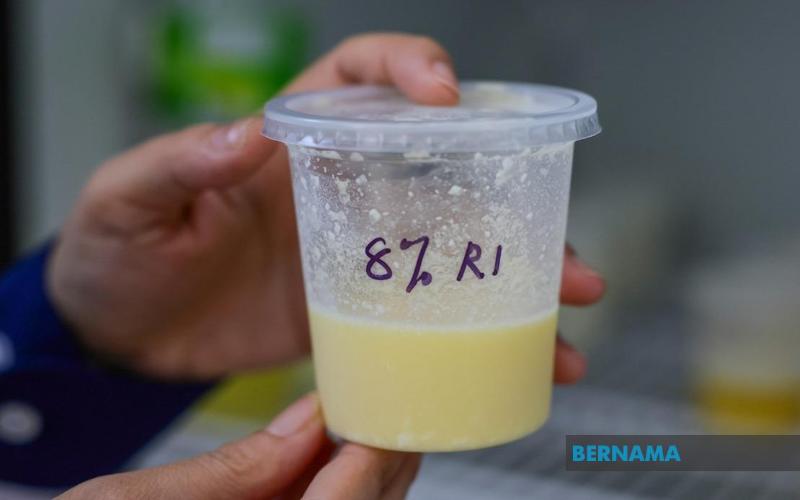
UniSZA Turns Probiotic Buffalo Milk Whey For Local Dairy Growth


Universiti Sultan Zainal Abidin (UniSZA) has initiated the production of probiotic buffalo milk whey, aiming to enhance Malaysia’s local dairy industry. The research, starting in 2020, focuses on utilizing whey, a by-product of cheese making, for health-oriented beverages.

UniSZA Develops Probiotic Buffalo Milk Whey for Local Dairy Growth
The Faculty of Veterinary Medicine at Universiti Sultan Zainal Abidin (UniSZA) is spearheading a project to turn buffalo milk whey into a beneficial probiotic drink. Whey, previously considered a waste by-product in cheese production, is now being utilized as a key ingredient for health supplements and functional beverages. This innovation is aimed at bolstering the local dairy sector in Malaysia.

Dr. Noor Syaheera Ibrahim, Deputy Dean of the Faculty, highlighted that research on whey began in 2020, initially focusing on goat and cow milk. The scope was later expanded to include buffalo milk, with the development of whey probiotics now patented and documented in scientific publications.

The production process, carried out at the UniSZA Besut Campus, involves several stages including milk pasteurization and bacterial fermentation over 24 hours. The buffalo milk whey probiotics are enriched with beneficial bacteria like Lactobacillus acidophilus, promoting digestive health and immune support.

The buffalo milk is sourced from Malaysia’s sole dairy buffalo farm in Selangor. Currently, production is on a small scale, with limited availability during campus events. The product, which boasts a one-month shelf life, is noted for its similarity in taste to existing probiotic drinks.

Noor Syaheera explained the nutritional advantages of buffalo milk whey over cow’s milk whey, citing a higher protein content and immune-supportive properties. She emphasized its potential for commercialization as a cost-effective alternative to imported whey products, which are typically more expensive and available in powder form.

The team at UniSZA plans to conduct courses to educate the public on whey production, hoping to stimulate local entrepreneurial interest in buffalo milk-based products.


The Global Mozzarella Cheese Market to Reach $68.59 Billion by 2034


According to the latest research report released by Fact.MR, the global mozzarella cheese market reached a size of US$38.6 billion in 2024 and subsequently expand at a CAGR of 5.9% over the next 10 years (2024 to 2034).

Mozzarella cheese, also known as curd cheese, can be sliced and used in food products. Mozzarella is popular for a variety of reasons, including its ease of melting, elastic and bouncy consistency, and smooth and soft texture.

The mozzarella cheese market is projected to grow at a steady pace. This growth is driven by mozzarella’s nutritional benefits, including its high calcium, protein, and vitamin content, which are increasingly recognized for supporting bone health and overall wellness. As the population becomes more health-conscious. Diabetic food manufacturers continue to consume a significant amount of mozzarella cheese.

Major contributors to this market expansion include key players such as Groupe Lactalis, known for its reduced-fat innovations, and Fonterra, which excels in export-grade mozzarella. The Grande Cheese Company is also a significant player, focusing on shreddable forms and clean-label certifications.

By application, food & beverage processing leads the market with a 44.23% share in 2024, valued at $17.07 billion, and is forecasted to reach $29.97 billion by 2034 at a 5.8% CAGR. Supermarkets and hypermarkets are the dominant sales channels, accounting for 50% of the market in 2024, expected to rise to $34.2 billion by 2034.

Regional dynamics reveal that North America holds a 24.7% global market share in 2024, with the U.S. leading at $7.07 billion, projected to grow to $11.63 billion by 2034. Meanwhile, East Asia is expanding its market share, driven by urbanization and rising incomes, with Japan at the forefront.

Recent market developments include Saputo‘s August 2022 launch of ‘Frigo Cheese Heads Swirls‘ and Dalter Alimentari’s March 2021 debut of cheese matchsticks, emphasizing the market’s focus on innovation and versatility.