Milk Replacers Market Set to Reach $10.1 Billion by 2035
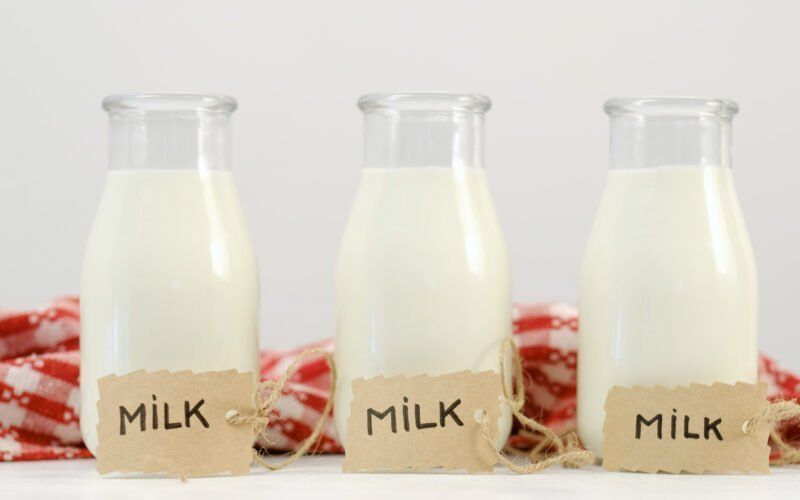
Milk Replacers Market Is Projected to Reach $10.1bn by 2035
Rising demand for precision livestock nutrition, automation and standardized young-animal feeding drives global market expansion.

The global milk replacers market is projected to expand from $4.9 billion in 2025 to $10.1 billion by 2035. The forecast implies a 7.4% compound annual growth rate over 2026–35. Milk replacers are increasingly important in modern livestock nutrition, providing young animals with controlled amounts of protein, fat, vitamins and minerals when whole milk is unavailable, costly or less practical for farm operations.

Dairy production supplies key ingredients

The industry draws on ingredients including whey, skimmed-milk powder, lactose and dairy fats. Global milk production was about 985m tonnes in 2024, of which roughly 797 million tonnes, or 81%, came from cattle. This dairy-processing base supplies manufacturers with ingredients used in milk-replacer formulations.

Non-medicated products represented more than 70% of the market in 2025. They are used for routine calf feeding without therapeutic drugs. Medicated products serve a narrower purpose, combining nutritional support with approved disease-control treatments and requiring regulatory compliance and veterinary oversight.

Join the 2nd MENA Dairy Congress on January 24–25 in Al Ain, UAE — a key meeting point for dairy industry leaders, producers, investors, experts, and technology providers from across the MENA region and beyond.

Discover new market opportunities, exchange expertise, build valuable business connections, and discuss the future of the dairy industry in one of the region’s most dynamic markets.

Register here: https://menadc.dairynews.today

Ruminants and powders dominate

Ruminants accounted for more than 79% of the market in 2025, reflecting the use of replacers in calf-rearing systems. Cattle herds in North America and Europe provide a large recurring customer base, while swine, equine and pet applications include feeding orphaned, weak or nutritionally vulnerable young animals.

Milk-based products captured more than 65% of the market in 2025. Skimmed-milk powder, whey, lactose and whey proteins are used for their digestibility and nutritional suitability. Powder was the leading product form, with more than 88% of the market, supported by its storage, transport, handling and mixing characteristics. Liquid products remain available in ready-to-feed formats, including for farms using automated feeders.

Costs and technology shape product development

Volatility in dairy-protein prices is a challenge for manufacturers. Whey-protein demand from sports nutrition and other food applications competes with animal-feed requirements. Producers are therefore examining blends that combine skimmed-milk powder, plant proteins and other nutritional ingredients. Such formulations can be used to balance nutritional performance, ingredient availability and manufacturing costs.

Automated calf feeders can dispense measured quantities of replacer, reduce manual feeding work and support regular feeding schedules. Farms are also adopting programmes designed around specified early-life growth targets. Premium products may include adjusted protein-to-fat ratios, probiotics and ingredients aimed at gut health. Precision-fermented casein and whey-equivalent proteins remain at relatively small commercial volumes and are being examined as alternative sources of dairy proteins.

Regional and competitive landscape

North America accounted for more than 40% of the global market in 2025. The region has a developed dairy sector, large commercial farms and established livestock-management practices. Asia-Pacific is expected to be among the faster-growing regional markets as dairy production becomes more commercialised and producers in China, India and other Asian countries invest in farm modernisation and structured feeding systems.

Dairy labor shortages affect the preparation and use of milk replacers. Accurate powder measurement, suitable water temperature, equipment hygiene, feeder cleaning and monitoring of young animals are required. Suppliers are offering automated-feeder compatibility, simplified preparation guidance, digital training, remote assistance and farm-level technical support alongside the products.

Companies active in the market include Land O’Lakes, Trouw Nutrition, Cargill, ADM, Denkavit, Lactalis Ingredients, CHS, Milk Specialties Global, Glanbia and Royal FrieslandCampina. Their offerings span calf nutrition, dairy ingredients, animal-feed solutions, feeding technologies and technical services.

If you are looking for more milk replacer offers, check it out here!
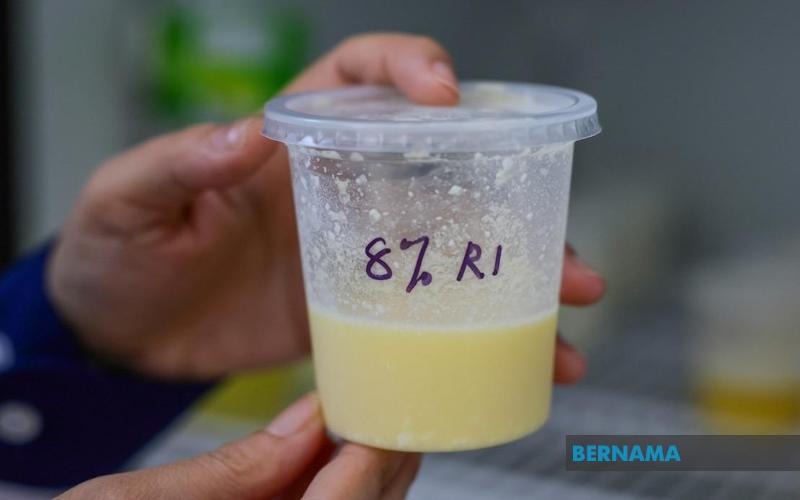


UniSZA Turns Probiotic Buffalo Milk Whey For Local Dairy Growth


Universiti Sultan Zainal Abidin (UniSZA) has initiated the production of probiotic buffalo milk whey, aiming to enhance Malaysia’s local dairy industry. The research, starting in 2020, focuses on utilizing whey, a by-product of cheese making, for health-oriented beverages.

UniSZA Develops Probiotic Buffalo Milk Whey for Local Dairy Growth
The Faculty of Veterinary Medicine at Universiti Sultan Zainal Abidin (UniSZA) is spearheading a project to turn buffalo milk whey into a beneficial probiotic drink. Whey, previously considered a waste by-product in cheese production, is now being utilized as a key ingredient for health supplements and functional beverages. This innovation is aimed at bolstering the local dairy sector in Malaysia.

Dr. Noor Syaheera Ibrahim, Deputy Dean of the Faculty, highlighted that research on whey began in 2020, initially focusing on goat and cow milk. The scope was later expanded to include buffalo milk, with the development of whey probiotics now patented and documented in scientific publications.

The production process, carried out at the UniSZA Besut Campus, involves several stages including milk pasteurization and bacterial fermentation over 24 hours. The buffalo milk whey probiotics are enriched with beneficial bacteria like Lactobacillus acidophilus, promoting digestive health and immune support.

The buffalo milk is sourced from Malaysia’s sole dairy buffalo farm in Selangor. Currently, production is on a small scale, with limited availability during campus events. The product, which boasts a one-month shelf life, is noted for its similarity in taste to existing probiotic drinks.

Noor Syaheera explained the nutritional advantages of buffalo milk whey over cow’s milk whey, citing a higher protein content and immune-supportive properties. She emphasized its potential for commercialization as a cost-effective alternative to imported whey products, which are typically more expensive and available in powder form.

The team at UniSZA plans to conduct courses to educate the public on whey production, hoping to stimulate local entrepreneurial interest in buffalo milk-based products.


HOW Whey Benefits YOUR Skin and Hair?


Now that you have made your Dill Bread and if you still have a lot of left over whey, firstly, let us get started and experiment it on your skin and hair.


Whey, the nutritious liquid left over from curdled milk when the curds are removed. Whey contains the water-soluble proteins, vitamins, and minerals in the milk. And there are many things you can do with this leftover whey. Besides using it in bread baking, soup stock, to cook pasta and in a pinch to ripen your cheese if you are out of culture, you can even drink whey plain or sweetened. When taken internally, whey protein is rapidly assimilated by the body and it provides your body with the complete protein it needs to regenerate and rejuvenate the protein-rich hair and skin cells.


Whey can be used on your skin as  cleanser, toner and moisturizer. Whey is gentle and slightly anti-microbial. Recent personal testimonies have stated that whey helps with acne. In fact, it was shown in a cosmetic pre-development research that whey helps lighten skin pigmentation like, age spots. And several commercial skin products have incorporate whey in their skin care products due to its benefits.


The simplest way to use whey for skin care is a whey bath. Simply add 1-2 cups of whey to a tub of fresh water. Soak for 10-20 minutes. The acidity of the whey is great for restoring the pH level of the skin, and the whey proteins will help rejuvenate skin cells.

[ad#ad-1]


For tired eyes, wet a tea bag with cold whey and place over closed eyes. It is best when apply in the morning. In five to ten minutes, you should feel completely refreshed!


For any homemade skin care recipes that use water, use whey instead, and when using a dry clay mask, wet your face first with whey.


Now that you have a list of whey benefits so, go ahead and make your own whey toner.


Why make whey toner?


Whey is a fantastic product for the skin, as well as for hair care.


Whey toner is one of my favorites  for mornings and it is inexpensive.  Make the night before and store in the refrigerator. Use ice-cold over face for a great way to start the day. Leave on for 5 minutes, then rinse with cool water.


If you already have leftover whey from making cheeses, then this is great! Just use about 1 cup of whey to make the tea as per instructions below. But, if you do not, this recipe is a quick way to make instant whey and toner.

  • 1/2 cup Goat milk buttermilk
  • 1 Chamomile tea bag


Place the tea bag and the buttermilk in a small, microwaveable bowl. Microwave on high for about 1 minute, or until the buttermilk has separated into “curds and whey,” and is steaming hot, but not boiling.

Strain through a tea strainer into a jar and refrigerate. Use the next morning to make your face feel alive! Additionally, your face will feel incredibly clean, but not dry.


Goat Milk Bath Bombs Recipe


Fizzing bath bombs are the perfect way to transform an ordinary bath into a luxury soak to soothe sore, tired skin. A creamy goat milk bath bomb will moisturize dry skin while calming irritations caused by psoriasis, eczema, sunburns and other conditions.


Requirements:


  • Citric acid
  • Baking soda
  • Goat Whey Powder
  • Vanilla essential oil
  • Almond oil
  • Molds
  • Waxed paper
  • Air-tight container


Instructions:


  1. Measure 1/2 cup citric acid, 1 and 1/4 cups baking soda and 1/4 cup of powdered goat milk in a bowl. Stir the dry ingredients until combined.
  2. Add 15 drops of vanilla essential oil and 2 tsp. of water to the mixture. Other essential oils that work great with goat milk include musk, sandalwood and jasmine. Add about 5 drops of food coloring, if desired.
  3. Drizzle almond oil slowly into the mixture, gradually adding between 2 and 6 tbsp. Stir the mixture constantly, adding only enough oil as is necessary for the bath bombs to hold together without crumbling when formed into a ball.
  4. Press the mixture firmly into lightly oiled molds, allowing the bath bombs to set for a few minutes before tapping them out onto a sheet of waxed paper. Allow your goat milk bath bombs to dry thoroughly before placing them in an airtight container for storage.


What is your favorite scent combination?


How Whey Benefit Your Hair?


Whey is an excellent hair care product. Whey nourishes, strengthens and softens hair. You will probably find that after using whey on your hair, it is much healthier and shinier looking. And, because it is slightly acidic, whey helps improve the health of your scalp – where your hair gets its nourishment.


There are several variations of uses for whey on your hair. If your hair is not extremely filthy or oily, you can use whey in place of a shampoo to cleanse your hair. Just rub in thoroughly and rinse with cool to lukewarm water.


If your hair needs a thorough cleansing than shampoo first, and follow with a whey rinse. Leave on the hair for 5 to 15 minutes, then gently rinse with water.


Need some serious conditioning? Wet clean hair thoroughly with the whey, brushing with styling brush to distribute evenly, then let dry naturally. Rinse with warm water, dry and style. You are really going to love how soft and silky your whey-conditioned hair looks.


Another of my favorite hair care uses for whey! If you use styling gel, cream or mousse on your hair, try using whey instead. Just spray or comb whey through your wet hair and style as usual.


The whey adds great texture and body to hair, and is especially useful for fine or limp hair, because it does not weigh it down like many hair products. Just be sure to keep separating the hairs as you dry, or the hair will tend to clump together, just like gel, cream or mousse would do.


Whey is the best heat and humidity-resistant hair styling product that I have come across. Even in an extreme heat index of over 110 degrees F, the whey would hold your hair without collapsing.


And, not forgetting, you are getting the benefit of all that protein for your hair as well!


Want more fun DIY Skin Care recipe?  Also, check out my other soaping recipes.