USDA Opens Dairy Margin Coverage Enrollment For 2027
USDA Opens Enrollment for 2027 Dairy Margin Coverage
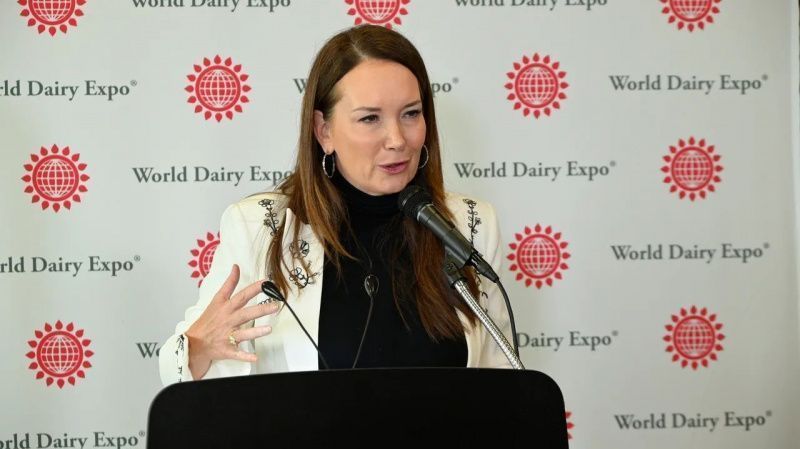
The United States Department of Agriculture said enrollment for the 2027 Dairy Margin Coverage programme will officially run from October 5 through December 18. Agriculture secretary Brooke Rollins announced the schedule during a September 30 visit to World Dairy Expo. The application period is longer than the one-month window used in 2026.

The programme raises the Tier 1 production limit to 6 million pounds and offers a 25% premium discount to producers who maintain coverage through 2031.

Dairy Margin Coverage provides payments when the difference between the national all-milk price and the national average feed-ration cost falls below a margin selected by a producer. Under the programme’s statutory reauthorisation through the Working Families Tax Cut Act, baseline protection is available through the 2031 calendar year.

The revised rules increase the annual milk-production limit for the least expensive Tier 1 coverage from 5 million pounds to 6 million pounds. Producers may also update their historical production records to account for changes such as herd improvements, expanded facilities and higher yields per cow. Farms that commit to uninterrupted protection through 2031 qualify for a 25% reduction in annual Tier 1 premiums.

Farm incomes have faced pressure from the relationship between milk revenue and feed expenses. Producers last received direct programme payments in January and February, while grain-market conditions and soybean-meal prices have affected operating cash flow. Industry projections cited in the source indicate that higher feed costs during the autumn could lead to further payments before the end of the year. The programme allows margin protection up to $9.50 per hundredweight.

Other federal farm measures have expanded eligibility under the Agriculture Risk Coverage and Price Loss Coverage programmes by adding as many as 30 million base acres nationwide. Alfalfa was not included as a primary covered commodity, but producers could assign up to 15% of tillable acreage planted with eligible non-programme crops between 2019 and 2023. Grass hay was excluded from the allocation. The treatment of perennial forage has prompted discussions about possible administrative changes.

US livestock authorities are also gradually restoring cattle movements across the southern border after a 15-month interruption linked to New World screwworm outbreaks. Inspection services have resumed at Douglas, Arizona, and Santa Teresa, New Mexico. A third facility at Columbus, New Mexico, is due to reopen if containment indicators remain favourable. More than 1.5m feeder cattle historically crossed the border each year. A Mexican biosecurity facility is expected to produce 100 million sterile flies by the end of the year, while a second facility in south Texas is planned for launch next spring.

“The containment strategy is working while we build those new facilities,” Rollins said. “The resumption of trade continues. It will take us a while to get back to that 1.5 million head crossing, maybe a couple of years. Until then we will just keep building up.”


U.S. Dairy Industry Undergoes Major $11 Billion Transformation

Walmart_Robinson
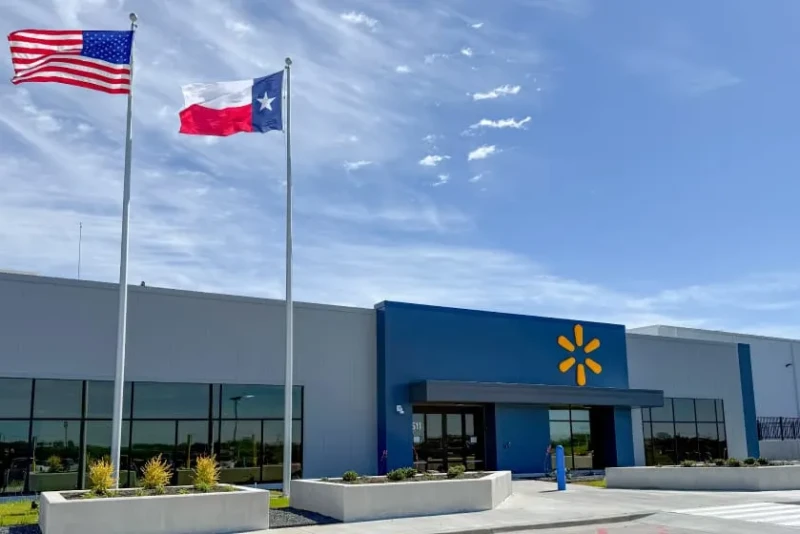
The United States dairy industry is undergoing one of its most substantial transformations in history, driven by an $11 billion investment. This transformation is characterized by the expansion of specialized plants and increased focus on whey protein production. One of the key players in this transformation is Walmart, which is integrating vertically to reshape the value chain and enhance global competitiveness.

Expansion of Specialized Plants

As part of the transformation, there is a significant expansion of plants specializing in dairy products. This expansion is aimed at meeting the growing demand for whey protein, a product that has seen a surge in popularity due to its nutritional benefits.

Impact of Major Retailers

Major retailers such as Walmart are playing a crucial role in this industry shift. By integrating vertically, these companies aim to streamline the supply chain and reduce costs, ultimately benefiting consumers with lower prices and potentially higher quality products.

The integration and expansion efforts are expected to redefine the competitive landscape of the global dairy market. This strategy could position the U.S. dairy industry more favorably against international competitors.

Walmart’s entry into the dairy sector is seen as a strategic move to leverage its massive distribution network and consumer base to gain a significant market share. The company’s vertical integration approach helps in reducing dependence on external suppliers.

Overall, these developments indicate a major shift in how dairy products are produced and distributed in the United States, with potential long-term impacts on the industry both domestically and internationally.


Transformation Of US Dairy Industry Over 250 Years

How US Dairy Achieved Global Nutrient Leadership
In the 250 years since the founding of the United States, no agricultural sector has undergone a more profound structural transformation than dairy processing and production. From 1776 homesteads to 2026 data hubs, 250 years of innovation transformed US dairy into a global leader in nutrient density.

The dairy industry has undergone a significant transformation over the past 250 years, evolving from small family farms to large-scale, high-tech operations. Modern mega-dairies are now equipped with advanced technologies, enhancing efficiency and sustainability.

The US dairy industry has experienced a profound transformation since the country’s founding in 1776. Initially, dairy production was a local, survival-driven necessity, with families keeping cows to provide essential nutrition. Over the next two and a half centuries, the industry evolved into a sophisticated network of high-tech, corporate mega-dairies.

By 2026, the traditional homestead model had been replaced by advanced commercial operations, with facilities milking over 1,000 cows. These modern production sites are equipped with real-time sensor platforms that allow herd managers to monitor animal health and nutrition with precision, a significant leap from the manual labor of the past.

Technological advancements have led to the development of crossbred animals designed to meet specific cheese production needs in international markets. The integration of large-scale anaerobic methane digesters and nutrient-recovery systems has transformed dairy operations into potential net-positive energy producers for local communities.

Despite these changes, the industry’s core remains tied to multi-generational family farming legacies. Daily routines on farms continue to reflect the silent, practiced choreography of livestock management that has defined the sector for generations.

By the turn of the 21st century, the industry had hit a staggering milestone of efficiency. As Dennis Rodenbaugh, chair of the Innovation Center for U.S. Dairy, recently noted, the modern U.S. dairy cow is a biological marvel. Compared to her midcentury predecessors, she produces five times more nutrition while using 65% less water and requiring 90% less land. We have spent 250 years perfecting the “how” of production. Now, we are entering the “why” of the digital era.

The industry’s progress is marked by the construction of modern manufacturing facilities, which serve as symbols of the new era. These developments have positioned American dairy producers as leaders in global nutrient supply, demonstrating a commitment to innovation while maintaining traditional roots.