USDA Opens Dairy Margin Coverage Enrollment For 2027
USDA Opens Enrollment for 2027 Dairy Margin Coverage
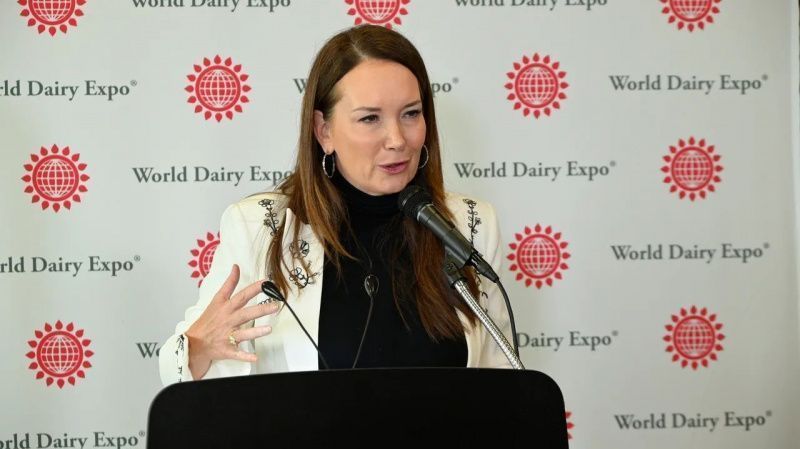
The United States Department of Agriculture said enrollment for the 2027 Dairy Margin Coverage programme will officially run from October 5 through December 18. Agriculture secretary Brooke Rollins announced the schedule during a September 30 visit to World Dairy Expo. The application period is longer than the one-month window used in 2026.

The programme raises the Tier 1 production limit to 6 million pounds and offers a 25% premium discount to producers who maintain coverage through 2031.

Dairy Margin Coverage provides payments when the difference between the national all-milk price and the national average feed-ration cost falls below a margin selected by a producer. Under the programme’s statutory reauthorisation through the Working Families Tax Cut Act, baseline protection is available through the 2031 calendar year.

The revised rules increase the annual milk-production limit for the least expensive Tier 1 coverage from 5 million pounds to 6 million pounds. Producers may also update their historical production records to account for changes such as herd improvements, expanded facilities and higher yields per cow. Farms that commit to uninterrupted protection through 2031 qualify for a 25% reduction in annual Tier 1 premiums.

Farm incomes have faced pressure from the relationship between milk revenue and feed expenses. Producers last received direct programme payments in January and February, while grain-market conditions and soybean-meal prices have affected operating cash flow. Industry projections cited in the source indicate that higher feed costs during the autumn could lead to further payments before the end of the year. The programme allows margin protection up to $9.50 per hundredweight.

Other federal farm measures have expanded eligibility under the Agriculture Risk Coverage and Price Loss Coverage programmes by adding as many as 30 million base acres nationwide. Alfalfa was not included as a primary covered commodity, but producers could assign up to 15% of tillable acreage planted with eligible non-programme crops between 2019 and 2023. Grass hay was excluded from the allocation. The treatment of perennial forage has prompted discussions about possible administrative changes.

US livestock authorities are also gradually restoring cattle movements across the southern border after a 15-month interruption linked to New World screwworm outbreaks. Inspection services have resumed at Douglas, Arizona, and Santa Teresa, New Mexico. A third facility at Columbus, New Mexico, is due to reopen if containment indicators remain favourable. More than 1.5m feeder cattle historically crossed the border each year. A Mexican biosecurity facility is expected to produce 100 million sterile flies by the end of the year, while a second facility in south Texas is planned for launch next spring.

“The containment strategy is working while we build those new facilities,” Rollins said. “The resumption of trade continues. It will take us a while to get back to that 1.5 million head crossing, maybe a couple of years. Until then we will just keep building up.”


Global Dairy Trade Index Rises 6.3% at First 2026 Auction

Following a poor run of results in recent months, the Global Dairy Trade (GDT) has recorded a positive start to 2026.

Source: GDT
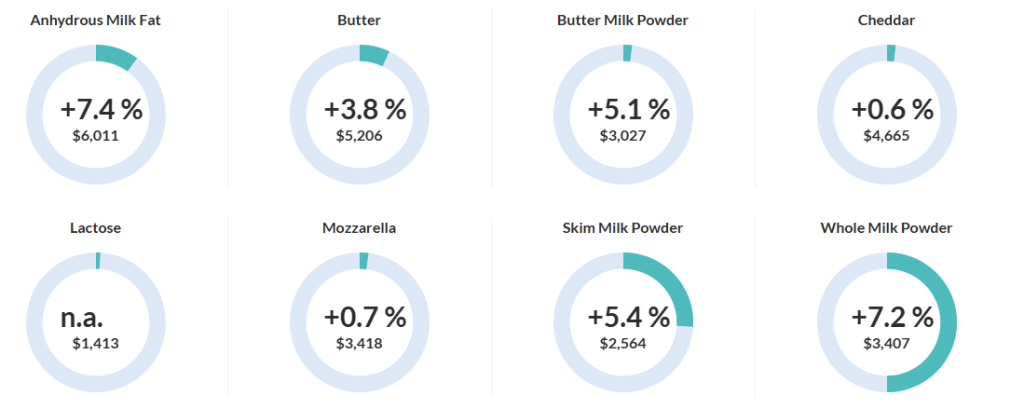
The inaugural Global Dairy Trade (GDT) event of 2026, identified as Event 395, took place on January 6 and sent a positive message to the international dairy market. The GDT Price Index experienced a notable rise of 6.3% compared to the previous event, signifying a robust start to the year for global dairy prices.

Experts noted that the strong rise in the index (+6.3%) was largely driven by the significant share of milk powder—especially whole milk powder—in total traded volumes, which were considerably lower than at previous auctions.

The auction highlighted a strong buyer presence, with average winning prices hitting USD 3,533 per metric ton, indicating increased competition and willingness to pay among buyers. There were 177 registered bidders participating in the auction, out of which 114 emerged as successful buyers.

The auction was extensive, comprising 26 bidding rounds over a span of 2 hours and 57 minutes, underscoring the intensity and demand present in the market. The volume of dairy products traded ranged between 27,936 and 34,923 metric tons, with the total quantity sold amounting to 29,282 metric tons, consistent with recent events.

This strong performance in the first GDT of 2026 provides a positive outlook for dairy producers, processors, and exporting countries, who are closely monitoring international price trends following a cautious end to 2025.


Bega Group Seeks To Acquire Fonterra’s Oceania Business


Bega Group has expressed interest in acquiring Fonterra’s Oceania operations, a move that aligns with Fonterra’s strategy to focus on dairy ingredients and foodservice.

Australian food and dairy company Bega Group is pursuing an informal merger clearance from the Australian Competition and Consumer Commission (ACCC) for a potential acquisition of Fonterra’s Oceania business unit. This unit includes operations in New Zealand and Australia and was put on the market last year, as part of Fonterra’s strategy to exit its consumer-facing operations and concentrate on dairy ingredients and foodservice channels.

Bega Group believes an acquisition of these assets would enhance outcomes for both the company and the wider dairy industry in Australia. However, Bega Group will be competing with other potential buyers, including French dairy giant Lactalis, which has already submitted a proposal to acquire Fonterra’s assets.

Other speculated bidders for Fonterra’s assets include Canada’s Saputo, Japan’s Meiji Holding Co., and the US investment company Warburg Pincus, although these have not been confirmed. Meanwhile, Bega Group intends to work closely with Fonterra Group on this potential acquisition.

Bega Group, headquartered in Bega, New South Wales, is known for its popular brands such as Vegemite and Bega Peanut Butter. The company reported a revenue increase of 3% to A$1.8 billion and a 44% rise in normalized EBITDA to A$110.3 million for the first half, with net profit after tax growing to A$35.9 million from A$13.3 million a year earlier.