Global Consumption Trends In Milk & Mixed Beverages

Global Consumption Trends in Milk and Mixed Beverages
Mixing the milk brings results.

A significant portion of consumers worldwide regularly consume milk and mixed beverages, with new product launches increasing. Key factors influencing purchases include taste, health benefits, and convenience.

In a report by Innova Market Insights, it is revealed that 29% of consumers worldwide consume milk and milk mixed beverages at least once daily, while 35% do so two to six times a week. Over the past five years, there has been an almost 8% increase in new product launches in this category. Global revenue growth from 2024 to 2025 was 4.1%, highlighting the sector’s robustness.

According to ingredients supplier Hydrosol, dairies are leveraging stabilising systems to create innovative products that offer flexibility in formulation. This approach helps them adapt to changing market demands and fluctuating raw material prices without sacrificing quality.

Innova Market Insights identifies taste (52%), health benefits (44%), and convenience (24%) as the primary sales drivers for flavored milk mixed beverages. Personalized health-focused products are becoming increasingly significant, particularly those rich in protein, vitamins, and minerals. Protein-rich products, in particular, have shown a growth rate of 48%, mainly among Generation X and Millennials.

Younger consumers, particularly Millennials and Gen Z, show a preference for products enriched with vitamins and minerals, while older consumers tend to favor beverages with high omega-3 fatty acid content. There is also a demand for reduced fat and sugar content in these beverages.

Dairies are offering various products such as protein-rich milk beverages and innovative hybrid drinks, catering to the diverse needs of different consumer groups. These concepts include carrageenan-free solutions and trending flavors like matcha latte variants, alongside traditional favorites like chocolate and vanilla.

One of the top trends for 2026, as noted by Innova Market Insights, is “Beverages with Purpose.” These products are not only rich in protein and fiber but also fortified with vitamins and minerals to support physical and mental health, gut health, and the immune system. The emphasis is also on healthy aging, weight management, and athletic performance.
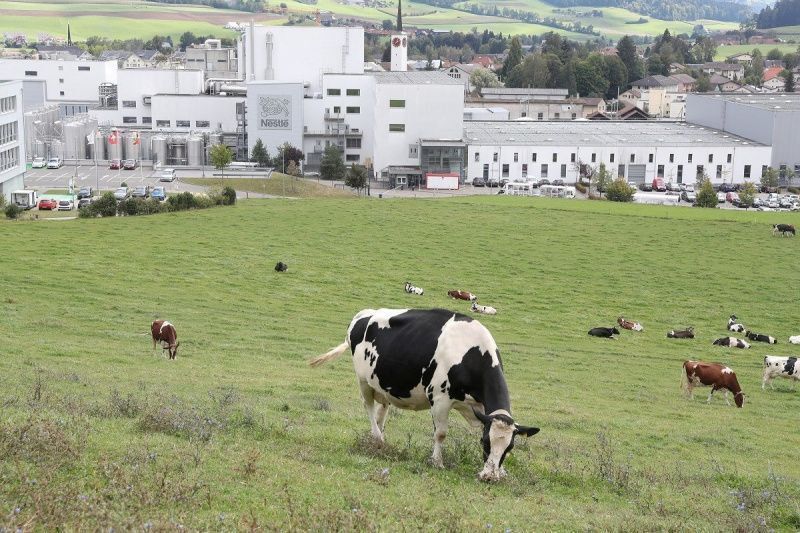

 

Nestlé Officially Unveils Its First Comprehensive Dairy Sustainability Roadmap

Nestlé Launches Comprehensive Dairy Sustainability Roadmap
Nestlé has launched its inaugural comprehensive Dairy Declaration and Sustainable Sourcing Strategy, marking a significant step in the company’s environmental efforts. This strategy outlines Nestlé’s long-term environmental goals, focusing on reducing greenhouse gas emissions within its extensive international supply chain.

Central to this initiative is the promotion of regenerative agriculture practices among the thousands of family farms contracted by Nestlé. The company plans to provide advanced technical training and financial support to help farmers improve on-farm efficiency. This includes incentives for practices such as soil health restoration, rotational grazing, and improved manure management, aiming to reduce the carbon footprint of milk production.

Implementing sustainable technologies presents financial challenges for independent farmers, as it requires significant investment. To address the potential strain on farm operating margins, Nestlé’s strategy includes developing stable procurement pricing models to protect partners from market volatility.

Beyond farm-level interventions, the strategy emphasizes improving raw material traceability and cold-chain logistics. Nestlé intends to collaborate with local cooperatives to establish regional collection centers equipped with advanced testing and chilling technologies, thereby reducing post-harvest waste and fuel consumption in transportation.

“The Dairy Plan shows that productivity, quality milk and sustainability are closely connected and can positively reinforce each other. Through our collaborative approach across the dairy value chain, we are working to advance this change,” said Katja Seidenschnur, Nestlé’s Head of Sustainability for the Nutrition & Health business.

“Together with farmers, we are deploying innovative solutions and technologies that help them build resilience to climate change and economic pressures, develop skills to run their farms as businesses and improve their livelihoods. These practices are also supporting Nestlé’s long-term access to high-quality milk and milk ingredients – crucial for the production of the nutritious products across our portfolio.”

This initiative reflects a broader shift in the dairy sector towards circular economy models, driven by increasing consumer demand for transparency and eco-friendly practices. As Nestlé rolls out these measures, industry observers will monitor their impact on rural economies and the overall carbon footprint of the dairy industry.


Goat Kefir Gains Popularity Amidst Fermented Dairy Boom

Goat Kefir Gains Popularity Amidst Fermented Dairy Boom
The global market for fermented foods and functional dairy products is undergoing rapid transformation driven by changing consumer demands. Within this landscape, goat kefir has transitioned from a niche or artisanal product to become one of the fastest-growing categories in large distribution chains.

Additionally, its nutritional benefits make it a sought-after alternative to traditional cow milk products.

Unlike conventional industrial yogurt, kefir involves a more intricate microbiological process. Its production requires the inoculation of kefir grains—a polysaccharide matrix where lactic acid bacteria and yeasts coexist symbiotically—initiating both lactic and alcoholic fermentation. Applying this process to goat milk significantly enhances the bioactive and nutritional properties of the final product.

Consumers are increasingly favoring goat milk due to its structural advantages that facilitate digestion. Goat milk naturally contains smaller fat globules and a higher proportion of medium-chain triglycerides (MCT), which allow for quicker and more efficient lipolytic action by human digestive enzymes. Furthermore, it has a distinct protein profile with lower concentrations of beta-casein A1 and alpha-S1-casein, which are often linked to intestinal inflammation and stomach sensitivity in individuals intolerant to conventional bovine dairy.

Goat milk also starts with slightly lower lactose levels than cow milk. During the kefir fermentation process, microorganisms consume and break down most of this sugar into lactic acid, making the final product suitable for those with mild to moderate lactose intolerance.

As goat kefir becomes more prominent in the market, its complex fermentation process and enhanced digestibility continue to attract health-conscious consumers looking for alternatives to traditional dairy products. Its very easy to incorporate into everyday life. It can be taken alone or combined with other foods, both for breakfast and in snacks or light dinners.