USDA Opens Dairy Margin Coverage Enrollment For 2027
USDA Opens Enrollment for 2027 Dairy Margin Coverage
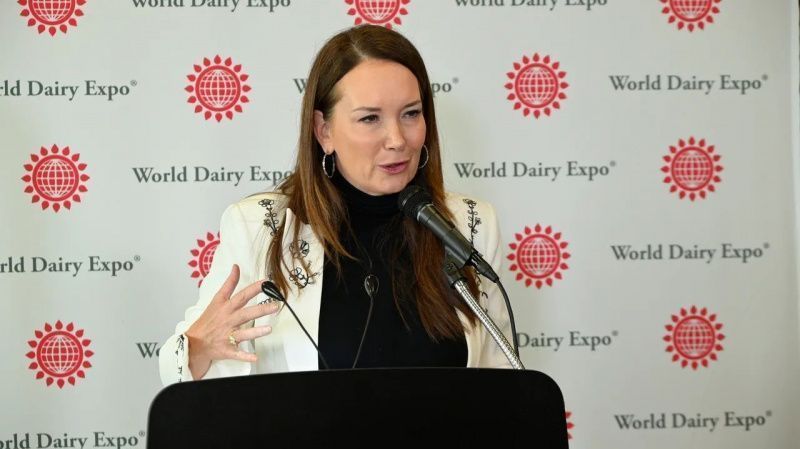
The United States Department of Agriculture said enrollment for the 2027 Dairy Margin Coverage programme will officially run from October 5 through December 18. Agriculture secretary Brooke Rollins announced the schedule during a September 30 visit to World Dairy Expo. The application period is longer than the one-month window used in 2026.

The programme raises the Tier 1 production limit to 6 million pounds and offers a 25% premium discount to producers who maintain coverage through 2031.

Dairy Margin Coverage provides payments when the difference between the national all-milk price and the national average feed-ration cost falls below a margin selected by a producer. Under the programme’s statutory reauthorisation through the Working Families Tax Cut Act, baseline protection is available through the 2031 calendar year.

The revised rules increase the annual milk-production limit for the least expensive Tier 1 coverage from 5 million pounds to 6 million pounds. Producers may also update their historical production records to account for changes such as herd improvements, expanded facilities and higher yields per cow. Farms that commit to uninterrupted protection through 2031 qualify for a 25% reduction in annual Tier 1 premiums.

Farm incomes have faced pressure from the relationship between milk revenue and feed expenses. Producers last received direct programme payments in January and February, while grain-market conditions and soybean-meal prices have affected operating cash flow. Industry projections cited in the source indicate that higher feed costs during the autumn could lead to further payments before the end of the year. The programme allows margin protection up to $9.50 per hundredweight.

Other federal farm measures have expanded eligibility under the Agriculture Risk Coverage and Price Loss Coverage programmes by adding as many as 30 million base acres nationwide. Alfalfa was not included as a primary covered commodity, but producers could assign up to 15% of tillable acreage planted with eligible non-programme crops between 2019 and 2023. Grass hay was excluded from the allocation. The treatment of perennial forage has prompted discussions about possible administrative changes.

US livestock authorities are also gradually restoring cattle movements across the southern border after a 15-month interruption linked to New World screwworm outbreaks. Inspection services have resumed at Douglas, Arizona, and Santa Teresa, New Mexico. A third facility at Columbus, New Mexico, is due to reopen if containment indicators remain favourable. More than 1.5m feeder cattle historically crossed the border each year. A Mexican biosecurity facility is expected to produce 100 million sterile flies by the end of the year, while a second facility in south Texas is planned for launch next spring.

“The containment strategy is working while we build those new facilities,” Rollins said. “The resumption of trade continues. It will take us a while to get back to that 1.5 million head crossing, maybe a couple of years. Until then we will just keep building up.”




USDA Projects Steady Growth in U.S. Dairy Production 2026

dairy production
The U.S. Department of Agriculture has released their Dairy Production Projections for 2026.

The U.S. Department of Agriculture (USDA) has announced its projections for dairy production through the year 2026, indicating a steady growth in milk output. According to USDA Livestock Analyst Anthony Fischer, the growth in milk production has been consistent, although there has been a slight slowdown in recent years.

Fischer said, “Milk output continues to grow. It’s appeared to slow down a bit in recent years, but the trend is pretty steady. Milk output per cow growth is expected to continue into 2026 as farmers take advantage of genetic advancements and improved herd management. The steady growth in output has helped farmers manage milk production during times of weather disruptions and (Highly Pathogenic Avian Influenza) HPAI-related decreases to output per cow, specifically in California in the first quarter of last year.”

In terms of milk components, Fischer highlighted that these are mirroring the growth in milk output per cow. The most recent quarterly milk fat percentage was recorded at 4.44%, marking a record high for all quarters. This trend reflects both genetic advancements and a shift in consumer preferences towards dairy products over fluid milk.

Fischer added that the milk fat percentage is expected to rise further by 2026, driven by increased output per cow and a dairy herd that is stabilizing rather than expanding rapidly. Seasonal patterns are anticipated to remain consistent, with an increase in milk production typically seen during the spring flush in the second quarter this year.


USDA Allocates $263 Million For Dairy & Agricultural Products To Support Food Banks

USDA Allocates $263 Million for Dairy and Agricultural Products to Support Food Banks

The United States Department of Agriculture (USDA) has committed to purchasing up to $263 million in dairy and agricultural products. This initiative falls under Section 32 of the Agriculture Act of 1935 and is intended to bolster nutrition assistance programs and food banks across the nation. USDA Secretary Brooke Rollins highlighted that this effort aims to stabilize farm income and protect rural jobs by converting agricultural harvests into meals.

The breakdown of the purchases includes $75 million for butter, $32.5 million for cheddar cheese and cheese products, $10 million for Swiss cheese, and $20.5 million for fresh fluid milk. Additionally, $10 million will be spent on ultra-high temperature milk. These products will be essential in supporting food banks and nutrition programs.

Beyond dairy, the USDA’s purchase plan covers a variety of agricultural products such as chickpeas, dried beans, fresh pears, lentils, pecans, split peas, and walnuts, with individual allocations ranging from $10 million to $25 million. Secretary Rollins emphasized the importance of these purchases in sustaining the agricultural economy and reinforcing the food supply chain.

The USDA’s action is designed to inject critical dollars into local economies while ensuring that American families have access to nutritious food. By targeting a wide range of products, the USDA seeks to provide comprehensive support to both producers and consumers during challenging economic times.