A Meta-analysis Links 50 grams Of Yoghurt Daily To 7% Lower Diabetes Risk


A comprehensive analysis involving 483,090 participants from the United States, United Kingdom, the Netherlands, Spain, Australia, and Japan examined the relationship between yogurt consumption and type 2 diabetes (T2D). Consuming an additional 50 grams of yogurt daily reduced the reported risk of illness by 7%. The analysis did not determine that yogurt alone can prevent diabetes.

Yoghurt is made by fermenting milk with living bacteria. The main cultures are Lactobacillus delbrueckii subspecies. bulgaricus and Streptococcus thermophilus, while some products contain additional probiotic strains. Fermentation makes yoghurt a source of live microorganisms alongside its protein and calcium.

Research on fermented foods has also examined a broader range of metabolic indicators. Another analysis involving more than 27,000 people found that higher intake of foods containing active microorganisms was associated with better blood pressure, blood sugar, insulin, triglycerides, HDL cholesterol, and waist circumference measurements.

Join the 2nd MENA Dairy Congress on January 24–25 in Al Ain, UAE — a key meeting point for dairy industry leaders, producers, investors, experts, and technology providers from across the MENA region and beyond.

Discover new market opportunities, exchange expertise, build valuable business connections, and discuss the future of the dairy industry in one of the region’s most dynamic markets.

Register here: https://menadc.dairynews.today

One area of investigation concerns the relationship between microorganisms in fermented foods and the intestinal microbiota. María Elena Torresani, a nutrition doctor and member of PROFENI, said the observed effects did not appear to be linked only to the nutrients in these foods. She also pointed to the possible role of live microorganisms and their interaction with the intestine.

Nutrition specialist Mónica Katz said that the connection between the microbiota and chronic diseases is currently one of the most active areas of research. A diverse and healthy microbiota has been associated with the regulation of metabolic, inflammatory and immune processes, although the extent of these relationships remains under study.

The yoghurt findings also showed that regular consumers tend to have more favorable metabolic profiles, including less abdominal obesity and differences in microbiota composition. These observations do not identify a quantity of yoghurt that can independently prevent type 2 diabetes. The disease develops through multiple factors, and the results were described in the context of overall diet and lifestyle.

Try this if you love yogurt.
 

Milk Replacers Market Set to Reach $10.1 Billion by 2035

Milk Replacers Market Is Projected to Reach $10.1bn by 2035
Rising demand for precision livestock nutrition, automation and standardized young-animal feeding drives global market expansion.

The global milk replacers market is projected to expand from $4.9 billion in 2025 to $10.1 billion by 2035. The forecast implies a 7.4% compound annual growth rate over 2026–35. Milk replacers are increasingly important in modern livestock nutrition, providing young animals with controlled amounts of protein, fat, vitamins and minerals when whole milk is unavailable, costly or less practical for farm operations.

Dairy production supplies key ingredients

The industry draws on ingredients including whey, skimmed-milk powder, lactose and dairy fats. Global milk production was about 985m tonnes in 2024, of which roughly 797 million tonnes, or 81%, came from cattle. This dairy-processing base supplies manufacturers with ingredients used in milk-replacer formulations.

Non-medicated products represented more than 70% of the market in 2025. They are used for routine calf feeding without therapeutic drugs. Medicated products serve a narrower purpose, combining nutritional support with approved disease-control treatments and requiring regulatory compliance and veterinary oversight.

Join the 2nd MENA Dairy Congress on January 24–25 in Al Ain, UAE — a key meeting point for dairy industry leaders, producers, investors, experts, and technology providers from across the MENA region and beyond.

Discover new market opportunities, exchange expertise, build valuable business connections, and discuss the future of the dairy industry in one of the region’s most dynamic markets.

Register here: https://menadc.dairynews.today

Ruminants and powders dominate

Ruminants accounted for more than 79% of the market in 2025, reflecting the use of replacers in calf-rearing systems. Cattle herds in North America and Europe provide a large recurring customer base, while swine, equine and pet applications include feeding orphaned, weak or nutritionally vulnerable young animals.

Milk-based products captured more than 65% of the market in 2025. Skimmed-milk powder, whey, lactose and whey proteins are used for their digestibility and nutritional suitability. Powder was the leading product form, with more than 88% of the market, supported by its storage, transport, handling and mixing characteristics. Liquid products remain available in ready-to-feed formats, including for farms using automated feeders.

Costs and technology shape product development

Volatility in dairy-protein prices is a challenge for manufacturers. Whey-protein demand from sports nutrition and other food applications competes with animal-feed requirements. Producers are therefore examining blends that combine skimmed-milk powder, plant proteins and other nutritional ingredients. Such formulations can be used to balance nutritional performance, ingredient availability and manufacturing costs.

Automated calf feeders can dispense measured quantities of replacer, reduce manual feeding work and support regular feeding schedules. Farms are also adopting programmes designed around specified early-life growth targets. Premium products may include adjusted protein-to-fat ratios, probiotics and ingredients aimed at gut health. Precision-fermented casein and whey-equivalent proteins remain at relatively small commercial volumes and are being examined as alternative sources of dairy proteins.

Regional and competitive landscape

North America accounted for more than 40% of the global market in 2025. The region has a developed dairy sector, large commercial farms and established livestock-management practices. Asia-Pacific is expected to be among the faster-growing regional markets as dairy production becomes more commercialised and producers in China, India and other Asian countries invest in farm modernisation and structured feeding systems.

Dairy labor shortages affect the preparation and use of milk replacers. Accurate powder measurement, suitable water temperature, equipment hygiene, feeder cleaning and monitoring of young animals are required. Suppliers are offering automated-feeder compatibility, simplified preparation guidance, digital training, remote assistance and farm-level technical support alongside the products.

Companies active in the market include Land O’Lakes, Trouw Nutrition, Cargill, ADM, Denkavit, Lactalis Ingredients, CHS, Milk Specialties Global, Glanbia and Royal FrieslandCampina. Their offerings span calf nutrition, dairy ingredients, animal-feed solutions, feeding technologies and technical services.

If you are looking for more milk replacer offers, check it out here!


Sheep & Goat Milk Cheese Sector Expand Wisconsin Dairy

Wisconsin’s Sheep and Goat Cheese Sector Expands

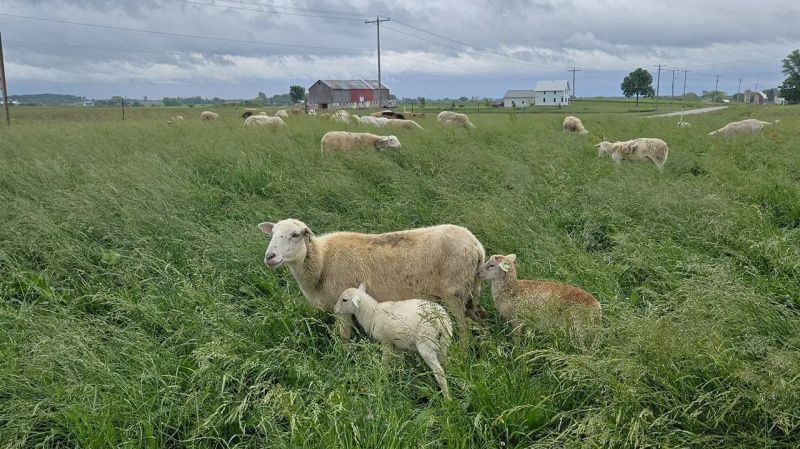
Wisconsin has expanded its role in US sheep and goat dairying as demand grows for specialty cheeses made from non-bovine milk. The company is leading the US state in sheep dairy operations with 14 specialized farms, while also ranking as the top producer of fluid goat milk, managing approximately 78,000 dairy goats, at about 18% of the US total. Recent tracking has recorded growth in both sectors, alongside larger regional herds and greater diversification at farm level.

Sheep and goat milk are used by specialty cheesemakers partly because of their distinct compositions and flavor characteristics. Sheep milk contains a high proportion of total solids content, producing cheeses described as rich, buttery and naturally nutty, particularly in semi-firm forms. Goat cheeses range from fresh and spreadable when young to more earthy and complex after ageing.

Regional creameries are processing these milks in small batches and selling the resulting products through farmers’ markets and specialty-food distributors. Blakesville Creamery is one example cited in the source. Online producer directories and appearances at regional fairs have also provided channels through which consumers can find farmstead sheep and goat cheeses.

Keeping small ruminants requires different facilities and routines from those used in cattle dairying. Sheep and goats are agile and fast-moving, requiring specialized handling areas, milking-parlour equipment adapted to their size, and herd-health procedures suited to the animals. The source also identifies milk yield efficiency and product value as factors attracting producers to the sector.

Sheep and goat dairies are being incorporated into plans for farm succession, land use and value-added agricultural businesses. Public-awareness efforts include the Alice in Dairyland program and breed associations dedicated to small ruminants. Wisconsin’s expanding processing base for non-bovine milk forms part of the state’s established specialty-cheese industry.