Whole Milk Returning To US Schools After Congressional Approval

What Lunch Ladies Want You to Know About School Lunch This Year | The ...

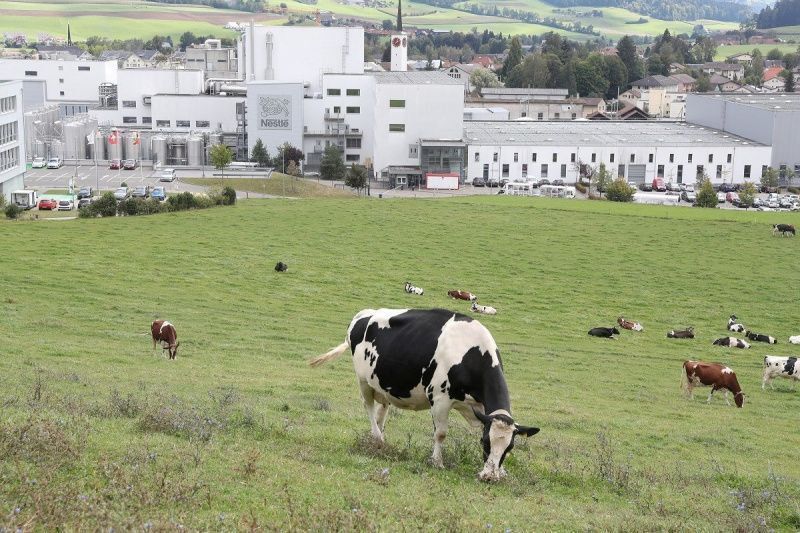
The Whole Milk for Healthy Kids Act has successfully cleared (Dec 15, 2025) both chambers of Congress, signifying a significant policy reversal regarding milk options available in US schools. This legislation overturns a 2012 federal rule from the Healthy, Hunger-Free Kids Act which restricted school milk offerings to only fat-free or 1 percent varieties. The bill, championed by bipartisan support and expected to be signed by President Trump, aims to reintroduce whole and 2 percent milk options.

Dairy farmers and industry representatives have warmly welcomed this legislative change, viewing it as a potential market booster. Keith Kimball, chairperson of the Northeast Dairy Producers Association, noted that whole milk contains essential nutrients beneficial for children’s growth. The reintroduction of whole milk is seen as a way to meet children’s beverage preferences while promoting science-backed nutrition choices.

Economist Daniel Munch from the American Farm Bureau Federation noted that while the legislation might not result in substantial windfalls for dairy farmers, it is anticipated to have a measurable impact on dairy markets. Schools, serving nearly 4.9 billion lunches in 2024, could shift significant butterfat volumes from butter and cheese production back into fluid milk channels. This change may benefit smaller dairies by creating local farm-to-school supply opportunities.

Senator Kirsten Gillibrand emphasized the importance of the legislation for student nutrition and local agriculture, highlighting the National School Lunch Program’s influence on dairy demand. The program serves about 30 million students daily and accounts for approximately 7.5 percent of US fluid milk sales, thus playing a key role in shaping market dynamics.


China’s Dairy Industry Stabilizes with Mega-farms Dominate Production

China's Dairy Industry Stabilizes as Mega-farms Dominate Production
The United States Department of Agriculture (USDA) projects that China’s dairy industry will reach a phase of structural stability by 2026. This follows a period of volatility characterized by declining milk prices since 2022. As a result, smaller dairy producers have exited the market, leading to a consolidation of production within larger industrial operations.

According to the USDA’s office in Beijing, mega-farms now account for over 68% of China’s total milk production. This marks an increase of more than 2% compared to the previous year. The consolidation trend reflects a broader global pattern where operations with economies of scale dominate markets with compressed profit margins.

China’s local dairy production is gradually reducing its historic dependency on imports. Although fluid milk imports are expected to decline slightly by 2026, the production of skim milk powder is projected to increase, maintaining current import levels. Despite this progress, China remains reliant on foreign suppliers for specialized dairy products where domestic competitiveness is still developing.

The USDA also forecasts a slight growth in both the production and importation of butter and cheese. Meanwhile, imports of whey and derivatives are expected to remain strong. These projections highlight strategic opportunities for global exporters, as China’s domestic market continues to evolve.

Overall, the shift towards mega-farm dominance and increased local production are reshaping the dairy supply chain in China, with implications for technology, bovine genetics, feed, and specialized veterinary services. This transformation is steering China’s dairy industry towards efficiency and biosecurity standards comparable to leading Western dairy regions.


Wisconsin Dairy Summit On November 18 to Highlight Innovative Research


The Dairy Innovation Hub is set to host its sixth annual Dairy Summit conference on November 18 at the University of Wisconsin–River Falls College of Agriculture, Food and Environmental Sciences (CAFES). The event will highlight over 260 research projects pivotal to the $52.8 billion Wisconsin dairy industry. The summit is designed for a wide audience and aims to showcase the Hub’s extensive research initiatives, which are bolstered by a $7.8 million annual state investment.

A key feature will be the inaugural student impact panel, highlighting the Hub’s focus on workforce development. The panel, involving students from UW–Madison, UW–River Falls, and UW–Platteville, will demonstrate the Hub’s role in providing essential research grants and networking opportunities. Among the highlighted projects, Mitchell Armstrong is studying membrane filtration technologies for dairy byproducts, while Mackenzie Krajco explores biochar covers to reduce greenhouse gas emissions from manure. Another initiative by Kylie Beilke revolves around milk quality research tackling mastitis and immune function in dairy cattle.

The summit will include guided tours of key facilities at UW–River Falls, such as the Dairy Pilot Plant and the Humane Handling Institute, offering attendees insights into cutting-edge research environments. Dean Mike Orth of CAFES voiced optimism about showcasing these facilities, particularly the modern Dairy Pilot Plant.

Since its inception, the Dairy Innovation Hub has funded more than 260 projects across its campuses, reinforcing Wisconsin’s stature as a leader in dairy. The summit is free and open to the public. Pre-registration is required.

DAIRY SUMMIT AGENDA – Nov. 18, Riverview Ballroom, University Center, UW–River Falls

  • 9 a.m. – Registration, posters, and continental breakfast
  • 9:45 a.m. – Welcome comments, UW–River Falls interim chancellor John Chenoweth
  • 10 a.m. – Student impact panel
  • 10:45 a.m. – Break, refreshments, and poster viewing
  • 11:15 a.m. – Hub-funded research introductions
  • 12:15 p.m. – Lunch
  • 1 p.m. – Poster session
  • 2-4:30 p.m. – Tours (participants will be split into smaller groups and rotate between three tour stops.)
  • 4:30 p.m. – Adjourn