Milk Replacers Market Set to Reach $10.1 Billion by 2035
Rising demand for precision livestock nutrition, automation and standardized young-animal feeding drives global market expansion.
The global milk replacers market is projected to expand from $4.9 billion in 2025 to $10.1 billion by 2035. The forecast implies a 7.4% compound annual growth rate over 2026–35. Milk replacers are increasingly important in modern livestock nutrition, providing young animals with controlled amounts of protein, fat, vitamins and minerals when whole milk is unavailable, costly or less practical for farm operations.
Dairy production supplies key ingredients
The industry draws on ingredients including whey, skimmed-milk powder, lactose and dairy fats. Global milk production was about 985m tonnes in 2024, of which roughly 797 million tonnes, or 81%, came from cattle. This dairy-processing base supplies manufacturers with ingredients used in milk-replacer formulations.
Non-medicated products represented more than 70% of the market in 2025. They are used for routine calf feeding without therapeutic drugs. Medicated products serve a narrower purpose, combining nutritional support with approved disease-control treatments and requiring regulatory compliance and veterinary oversight.
Join the 2nd MENA Dairy Congress on January 24–25 in Al Ain, UAE — a key meeting point for dairy industry leaders, producers, investors, experts, and technology providers from across the MENA region and beyond.
Discover new market opportunities, exchange expertise, build valuable business connections, and discuss the future of the dairy industry in one of the region’s most dynamic markets.
Register here: https://menadc.dairynews.today
Ruminants and powders dominate
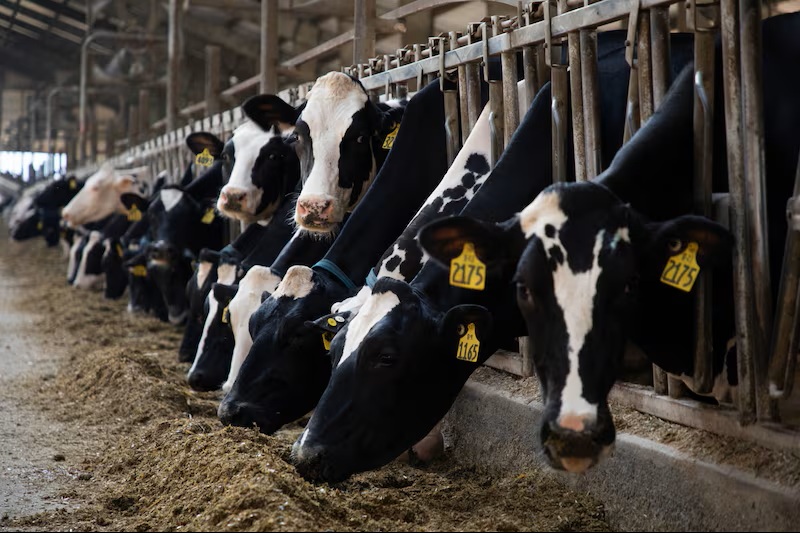
Ruminants accounted for more than 79% of the market in 2025, reflecting the use of replacers in calf-rearing systems. Cattle herds in North America and Europe provide a large recurring customer base, while swine, equine and pet applications include feeding orphaned, weak or nutritionally vulnerable young animals.
Milk-based products captured more than 65% of the market in 2025. Skimmed-milk powder, whey, lactose and whey proteins are used for their digestibility and nutritional suitability. Powder was the leading product form, with more than 88% of the market, supported by its storage, transport, handling and mixing characteristics. Liquid products remain available in ready-to-feed formats, including for farms using automated feeders.
Costs and technology shape product development
Volatility in dairy-protein prices is a challenge for manufacturers. Whey-protein demand from sports nutrition and other food applications competes with animal-feed requirements. Producers are therefore examining blends that combine skimmed-milk powder, plant proteins and other nutritional ingredients. Such formulations can be used to balance nutritional performance, ingredient availability and manufacturing costs.
Automated calf feeders can dispense measured quantities of replacer, reduce manual feeding work and support regular feeding schedules. Farms are also adopting programmes designed around specified early-life growth targets. Premium products may include adjusted protein-to-fat ratios, probiotics and ingredients aimed at gut health. Precision-fermented casein and whey-equivalent proteins remain at relatively small commercial volumes and are being examined as alternative sources of dairy proteins.
Regional and competitive landscape
North America accounted for more than 40% of the global market in 2025. The region has a developed dairy sector, large commercial farms and established livestock-management practices. Asia-Pacific is expected to be among the faster-growing regional markets as dairy production becomes more commercialised and producers in China, India and other Asian countries invest in farm modernisation and structured feeding systems.
Dairy labor shortages affect the preparation and use of milk replacers. Accurate powder measurement, suitable water temperature, equipment hygiene, feeder cleaning and monitoring of young animals are required. Suppliers are offering automated-feeder compatibility, simplified preparation guidance, digital training, remote assistance and farm-level technical support alongside the products.
Companies active in the market include Land O’Lakes, Trouw Nutrition, Cargill, ADM, Denkavit, Lactalis Ingredients, CHS, Milk Specialties Global, Glanbia and Royal FrieslandCampina. Their offerings span calf nutrition, dairy ingredients, animal-feed solutions, feeding technologies and technical services.
If you are looking for more milk replacer offers, check it out here!