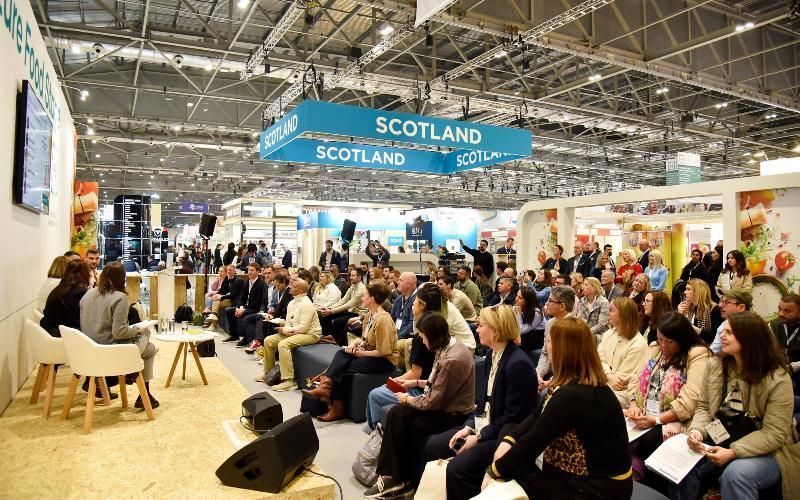
From British farm-led dairies to international cheese specialists, the exhibitor list reflects both the resilience and evolution of the category at a time of heightened sustainability scrutiny and retail pressure.
A strong line-up of dairy and cheese producers will feature at IFE 2026 (International Food & Drink Event), as more than 20 dairy-relevant brands prepare to showcase at Excel London from 30 March to 01 April.
UK producer Blackmore Vale Dairy will present its range of cultured dairy and cheese products, while The Ethical Dairy and Jersey Dairy underline the continued importance of provenance, farming standards and animal welfare in driving premium positioning.
International cheese producers are also well represented. Quesos Corcuera will showcase traditional Spanish cheeses including Manchego, while Italian exhibitor Calzetti brings its portfolio of DOP cheese products and cheese creams for retail and foodservice. From Argentina, Establecimientos San Ignacio will present its cheese and dairy specialities, and Polish dairy group MLEKOVITA adds further scale to the sourcing mix.
Together, the line-up highlights the breadth of opportunity across speciality, export and private label supply, but also a sector navigating structural change.
Alongside sourcing, IFE’s content programme will provide strategic context for dairy producers assessing how to balance commercial performance with sustainability commitments and evolving consumer expectations.
Sustainability and the planetary health debate
Few conversations are more central to dairy’s long-term positioning than the debate around sustainable diets. Mike Barry, Co-Founder of Planeatry Alliance, will explore how planetary health diet principles can be embedded into mainstream food systems.
“IFE is one of the key food gatherings each year to anticipate what’s next in our dynamic, fast-moving sector. It’s a great platform to explore the integration of the principles of a planetary health diet (PHD) – one that’s delicious, exciting and great value for money whilst delivering much better health, environment and justice outcomes – into our sector.”
Barry will focus on practical action across product development and supply chains. “We’ll be focusing not just on the imperative for adopting planetary health diet (PHD) principles across our sector but also the practical steps we need to take – from NPD, sourcing and manufacturing to a food environment that enables better choices to be made – to make a PHD reality for the mass market.”
For dairy producers working to reduce emissions, invest in regenerative farming and respond to retailer sustainability frameworks, the emphasis on implementation rather than rhetoric is likely to resonate.
Retail recalibration
At the same time, supermarket strategy continues to reshape the dairy fixture. Bryan Roberts, Retail Futures Senior Partner at IGD, will examine the trends and pressures facing grocery decision-makers.
“It’s always a fantastic opportunity to immerse yourself in the latest trends impacting the whole of food and drink consumption.” He adds: “The session will provide a concise exploration of the trends, pressures and opportunities keeping supermarket bosses awake at night. The grocery retail market has never been tougher, but, equally, there are some exhilarating opportunities for growth and recalibration.”
For cheese and dairy suppliers, that recalibration may include fixture rationalisation, premiumisation in speciality formats and continued scrutiny on price architecture.
Consumer resilience and evolving demand
Looking ahead, Mintel’s 2026 Food and Drink Predictions will provide insight into how consumer expectations are shifting under ongoing economic uncertainty.
Alice Pilkington, Associate Principal at Mintel, comments: “Mintel’s 2026 Food and Drink Predictions highlight opportunities for food and drink brands to strengthen consumers’ resolve to endure adversity now and in the years ahead. They discuss how consumers will look to food and drink to help them persevere and indeed thrive through times of ongoing uncertainty.
“During the session, we will explain why food and drink brands will place a bigger focus on consumers’ evolving nutritional needs, and also their changed attitudes towards both nostalgia and multisensory features, over the years ahead.”
For dairy, this points to continued opportunity in protein-rich formats, comfort-led cheese innovation, and premium sensory experiences rooted in heritage and authenticity.
A category in transition
With confirmed dairy cheese exhibitors spanning the UK, Spain, Italy, Argentina and Poland, IFE 2026 demonstrates that global appetite for dairy sourcing remains strong.
At the same time, the show’s content programme acknowledges the strategic questions facing the sector: how to align with sustainable diet frameworks, how to navigate retailer recalibration, and how to meet changing nutritional and emotional needs.
For cheese and dairy producers, IFE 2026 offers not only access to buyers, but insight into the forces shaping the next phase of category growth. Find out more on IFE site.

