Dairy Farmers Adopt Specialized Soybean Varieties To Raise The Quality & Milk Solids
Ganaderos apuestan por variedades especializadas de soja en la dieta bovina para elevar la calidad y los sólidos de la leche
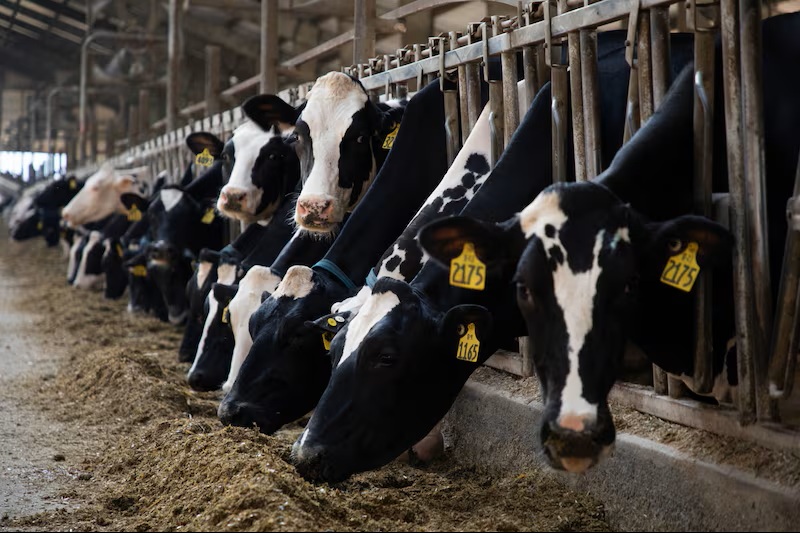
Dairy Farmers incorporate specialized varieties of soybeans into cattle diets to improve milk’s fat, protein content, organoleptic quality of milk, and reduce feed costs.

Producers are using higher-value soybean varieties and meals in dairy rations, including high-oleic soybeans and by-products with elevated levels of rumen-undegradable, or bypass, protein. The approach is designed to increase the production of total milk solids in the udder while supplying digestible lipids and essential amino acids.

The specialized feeds are also being used to influence rumen fermentation. Their stable unsaturated fatty acids are described as helping direct nutrients towards the mammary gland and as reducing the risk of milk-fat depression, a condition associated with diets containing high levels of conventional concentrates. The ration strategy is intended to support high lactation peaks without compromising rumen health or the body condition of high-producing cows.

On the financial level of the production units, higher percentages of butterfat and milk protein can affect farm revenues where processors pay according to the concentration of solids in each liter delivered. The use of denser protein and energy sources can also allow producers to reduce or replace some commercial fat supplements. Examples cited include calcium soaps and bypass fats derived from palm, both of which are described as high-cost inputs.

The financial measure used for this comparison is Income Over Feed Cost, which reflects the margin remaining after feed expenses. The source links the use of specialized soy products with an improvement in that margin through greater milk-solids output and lower reliance on certain purchased fat supplements.

At the level of industrial processing and consumer preference, milk from herds receiving the modified rations is described as having a richer texture, greater oxidative stability and a stronger flavor profile. These characteristics are relevant to processors making matured cheeses, creams, butter and premium fluid milk. The feed programme is also presented as addressing demand for functional foods with more balanced fatty-acid profiles and traceability from the farm.

The use of genetically optimized forage grains brings agricultural biotechnology together with precision nutrition and dairy-processing requirements. The stated objective is to match crop quality with the specifications of processors while improving efficiency, sustainability and value creation across the dairy supply chain. The report was sourced from Bloomberg Línea.


High Oleic Soybeans (HOSBs) Gain Popularity In Dairy Cattle Feed


A specialty soybean originally developed for food use is increasingly finding a market in dairy cattle feed. This shift offers benefits for soybean farmers and dairy producers by reducing costs and enhancing milk quality.

High oleic soybeans (HOSBs), a specialty crop initially developed for food production, are finding a new and expanding market in dairy cattle feed. Originally sought after by food manufacturers for their neutral flavor, high heat stability, and extended shelf life, these soybeans are now being used extensively in animal feed. In 2025, approximately 1 million acres of HOSBs were planted, with more than half of the production designated for dairy cattle feed.

HOSBs are notable for their unique fatty acid profile, which includes higher levels of oleic acid—75% compared to the 23% found in traditional soybeans—and lower levels of linoleic acid. This composition enhances the longevity and stability of the soybean oil, extending shelf life, making it more desirable in markets seeking products with lower saturated fat levels and increased heat resistance.

The adoption of HOSBs in dairy rations is driven by their potential to lower feed costs while improving milk components, thereby increasing income over feed costs for dairy producers. According to industry researchers and leaders, HOSBs could become the next significant value-added crop opportunity for soybean farmers.

Overall, HOSBs are utilized in various sectors: 55% in dairy cattle feed, 43% in human food, and 2% for industrial purposes. Their growing use in dairy feed reflects a shift in agricultural practices aimed at optimizing animal nutrition and economic returns. Find out more Dairy cattle feed.


Management And Care Of Dairy Goats

[ad#co-2]

The modern dairy goat produces milk of the highest quality and dairy goats are one of the most useful animals you can keep. Not only are they easy to look after and feed, they produce quality milk to make cheese, butter, yogurt and drinks. Unwanted kids are excellent as a source of meat for the house, the skins tan well and the fat is used to make soap. The female dairy goat is a doe; the male, a buck; the young, kids; and a castrated male, a wether. Their life span is about eight to twelve years.

Some of the basics know how about the management of dairy goats are:


Management

Ideally, goats should be dehorned when they are very young. It is advisable to wait until they are 1-2 weeks of age and in good flesh to be sure they are healthy and not coming down with neonatal diarrhea. If discolored skin is fixed to the skull in two rosettes, horn buds are present. Moveable skin indicates a naturally hornless condition.

Hooves should be trimmed frequently to assure proper development of the hoof.

To check the health of goats and determine suspected illness, it is useful to know their normal physiological values. Pulse is about 83 per minute ranging from 50 to 115. Respiration is around 29 per minute with a range from 15 to 50. Body temperature is about 103.6 degrees Fahrenheit.

Keeping good weight records is important for proper feeding and medication, besides good management. Tapes can be used for estimation of weight by measuring the heart girth behind the forelegs. There also exists normal growth curve to age-weight relationships. For large breed male goats, they are in average as follows: 1 month-25 lb., 3 months-55 lb., 6 months-85 lb., 9 months-110 lb., 12 months-130 lb., 18 months-155 lb., 24 months-170 lb., 36 months-205 lb. For smaller breeds and females, these standards are less, proportionate to the lesser adult body weight.

[ad#ad-1]


Feeding

Dairy goats need a year-round supply of roughage, such as pasture, browse or well-cured hay. Winter browse and pastures should be supplemented with hay. Milking, breeding and growing stock need a daily portion of legume hay, such as alfalfa. Kids and bucks need a balanced grain ration and milkers should be fed a standard dairy grain ration. Kids are milk fed until two to three months of age, but should be consuming forages such as pasture grass or hay by two weeks of age and grain within four. All dairy goats must have salt and fresh clean water. Mineral supplements are desirable.

Dairy goats have fastidious eating habits and are particular about the cleanliness of their food. Their natural curiosity may lead them to investigate newly found items by sniffing and nibbling, but they quickly refuse anything that is dirty or distasteful.


Pasture

Dairy goats will graze grass pastures, but prefer to browse brushlands and a varied selection of pasture plants, including non-noxious weeds. Dairy goats seldom thrive when tethered. They may be kept in a dry lot if fed adequate roughage and allowed shade and space for exercise. Dairy goats are curious and agile and require well built fences for containment and protection from predators.

In temperate climates, one-half acre of land per milking goat should be plenty. Under arid conditions, people must guard against the danger of overgrazing. Overstocking in temperate climates is also bad for goats, since it increases reinfestation of internal parasites. Rotational pasturing is one of the successful controls.


Housing

Dairy goats can be kept successfully in all climates. They do not need elaborate housing, but do require clean, dry, well ventilated, draft free shelter. Dirt pen floors are preferred over cement. At least 15 square feet of bedded area should be provided for each goat. The outside exercise lot should provide a minimum of 25 square feet of space per animal, well-drained and properly fenced. Dairy goats have a strong herd instinct and prefer the companionship of at least one other goat.

Bucks should be kept in separate quarters away from milking does.